About us

Golden Triangle tour
Description
Golden Triangle tour
This North India Tour comes with different shades and hues of Northern India. With hand – picked destinations and keenly crafted out tour plan; here we present to a tour which will last you memories forever. On this 16 Days North India with Taj Mahal and Ganges tour; you will get to see the most sought after travel destination – in a never before look!
Highlights of Tour
- Explore Jama Masjid, Red Fort, Qutub Minar – Delhi
- Explore the Jaisalmer Fort, Patwon ki Haveli
- A Visit the Kuldhara Village Khuri Desert Sunset camel ride
- Visit Palaces and Forts of Jodhpur
- Puppet Show at Udaipur
- Mesmerize with the wonderful beauty of city Palace – Udaipur
- Enjoy the boat ride in Lake Pichola
Day 01 : Welcome To Delhi
Meet & assist at Delhi airport / rly stn with our office assistance. Our staff will arrange your transfer and check in to the hotel in Delhi. Delhi-ites call it as ‘Dilli hai Dilwalo ki’. that means the city belongs to kind hearted people. It’s the largest metropolitan city in India that has rich and numerous tourist attractions. With lots of historical monuments, temples, and other places of interest, the city also houses other contemporary attractions. Beating the alluring attractions on tourists.
Qutab Minar – “The Tallest Minaret in India” the most popular and famous masterpiece of Indo-Muslim art is ‘Qutab Minar’.
Red Fort – “The Pride of India” The fort (Lal Quila) is the second most tremendous foundation of Shah Jahan after The Taj Mahal. Established in the 17th century.
Humayun’s Tomb -“A perfect example of Persian Architecture” Have you ever imagined that Humayun’s Tomb looks like Taj Mahal in Agra? Yes, it’s true as it was the inspiration for the formation of Taj Mahal.
Safdarjung’s Tomb -“The Last Quiver in the Lamp of Mughal Architecture” Developed in the style of Mughal Empire for the statesman Safdarjung’s, this tomb is known as a marble and sandstone mausoleum in New Delhi, India.
Jama Masjid – Jama Masjid-“The Biggest Mosque in India” One of the largest mosques of Old Delhi is ‘Jama Masjid’, which is also popular as “Masjid-i-Jahan Numa”.
Return to hotel and overnight at hotel in capital city of India.
Day 02 : Delhi - Agra
Take breakfast at hotel and proceed to visit Agra city is the home of the iconic Taj Mahal and many more.
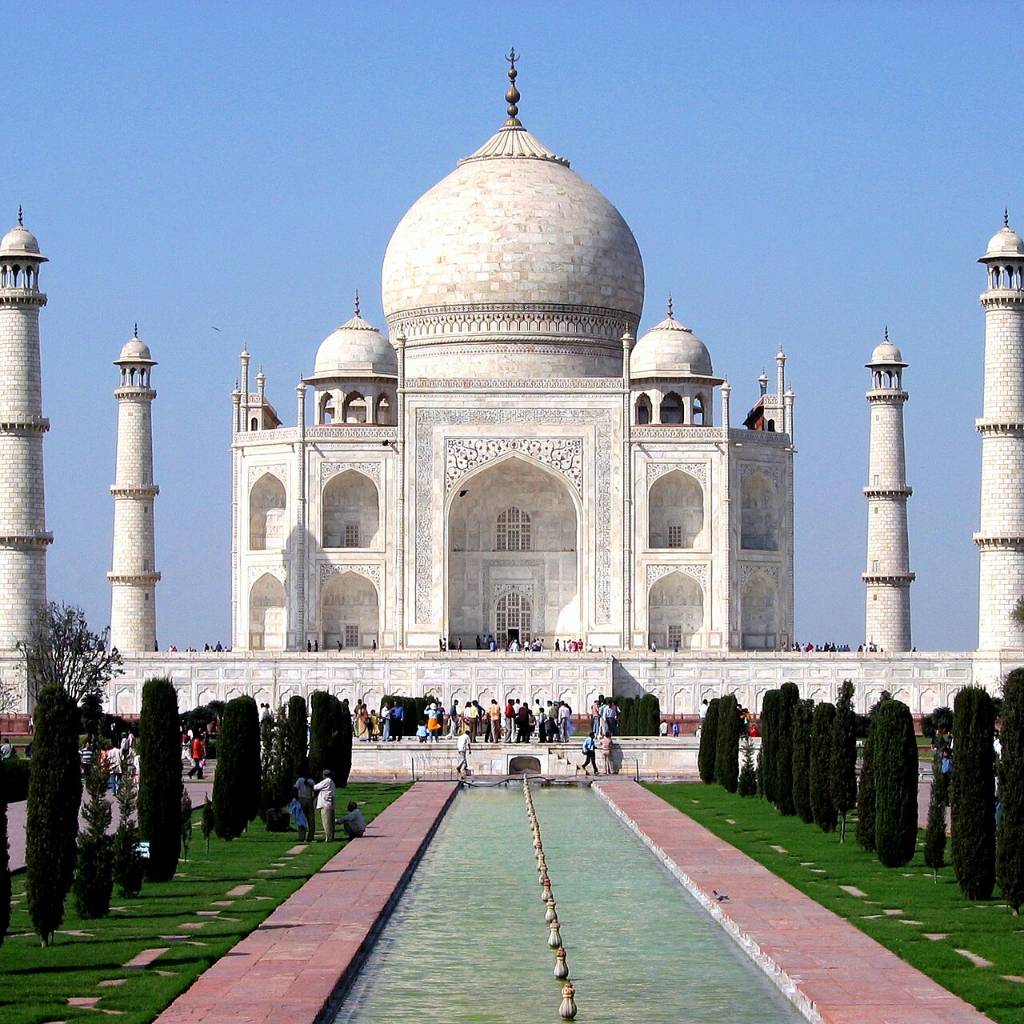
Taj Mahal – a mausoleum built for the Mughal ruler Shah Jahan’s wife, Mumtaz Mahal (who died in childbirth in 1631). The imposing main building features a massive dome and intricately carved white marble inlaid with precious stones. This is set behind a reflecting pool inside a courtyard defined by 04 minarets.
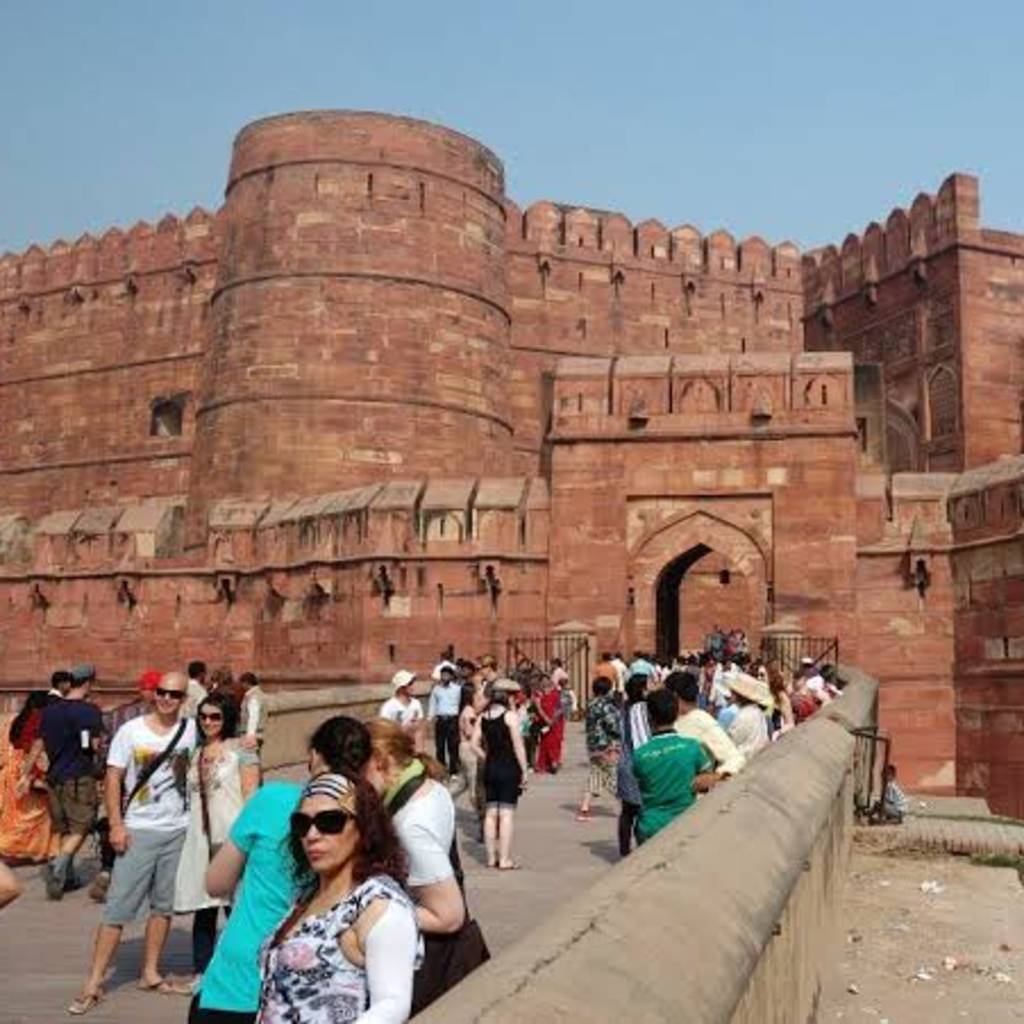
Agra Fort – National Museum of New Delhi – “A Brief View of Indian History” It was the main residence of the emperors of the Mughal Dynasty till 1638, when the capital was shifted from Agra to Delhi. The Agra fort is a UNESCO World Heritage site.
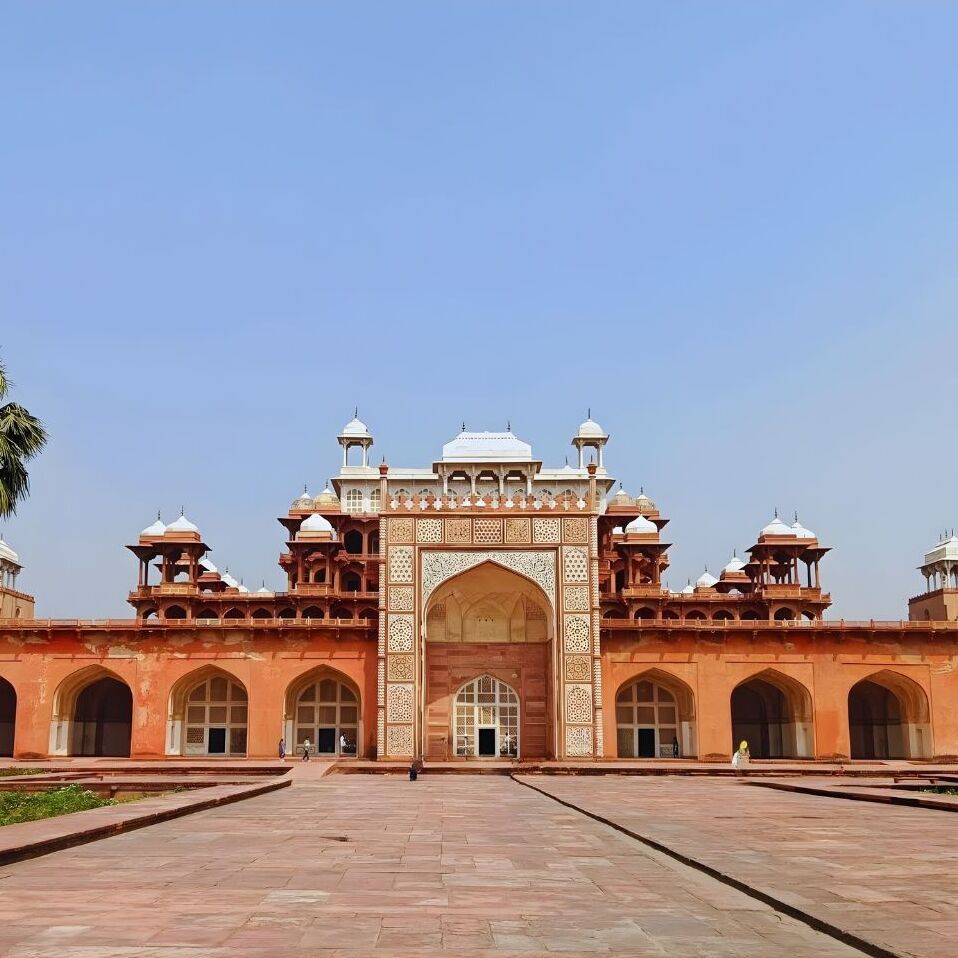
Sikandra Fort – Sikandra is named after Sikandar Lodi, the Delhi ruler who was in power from 1488 to 1517. Sikandra Fort is located in the western periphery of the city at a distance of about 10 kms from the city center. Sikandra the last resting place of the Mughal emperor Akbar.
Itmad-ud-Daullah – is a Mughal mausoleum in the city of Agra in the Indian state of Uttar Pradesh. Often described as a “jewel box”, sometimes called the “Baby Taj”, the tomb of I’timād-ud-Daulah is often regarded as a draft of the Taj Mahal.
After Agra tour leave for Jaipur. Enroute visit Fatehpur Sikri.
Fatehpur Sikri – Red sandstone buildings cluster at its center. Buland Darwaza gate is the entrance to Jama Masjid mosque. Nearby is the marble Tomb of Salim Chishti. Diwan-E-Khas hall has a carved central pillar. Jodha Bais Palace is a mix of Hindu and Mughal styles, next to the 05-story Panch Mahal that overlooks the site.
Reach by evening and check-inn to the hotel in Jaipur lager get refresh by evening get refresh your self and visit Jaipur Bazar. You can explore the bustling market of Jaipur by cycle rickshaw ride, which is paradise for shopping lovers, Jaipur is worldly famous for hand woven carpet, precious stones, handicraft, marble, textile, blue pottery, handmade papers, later return to the hotel for overnight stay.
Lunch in Agra, and overnight at hotel.
Day 03 : Jaipur
After breakfast sightseeing of Jaipur, Jaipur is a standout amongst the most socially rich legacy urban areas in India. Established in the year 1727, the city is named after Maharaja Jai Singh II who was the primary organizer of this city. He was a Kachhwaha Rajput and ruled the region in the vicinity of 1699 and 1744. During the rule of Sawai Ram Singh I, the city was painted pink to welcome the Prince of Wales, later Edward VII, in 1876. Many of the avenues remained painted in pink, giving Jaipur a distinctive appearance and the epithet Pink city… today we visit overnight stay in Jaipur.. today we visit
Amber Fort & Palace – Amer Fort is a fort located in Amer, Rajasthan, India. Amer is a town with an area of 04 square kilometers located 11 kilometers from Jaipur, the capital of Rajasthan. Located high on a hill, it is the principal tourist attraction in Jaipur.
Gaitore” Cenetophs (Front View) – Royal Cremation Ground of the Kachhwaha Rajputs. … Located at a distance of 15 km from Jaipur city, on Jaipur-Amber road, Gaitore is the royal crematorium of Maharaja’s. … Maharaja Sawai Jai Singh II cenotaph attracts everyone with its exceptional beauty.
Jal Mahal – Jal Mahal is a palace in the middle of the Man Sagar Lake in Jaipur city, the capital of the state of Rajasthan, India. The palace and the lake around it were renovated and enlarged in the 18th century by Maharaja Jai Singh II of Amber. Take a photo stop here.
City Palace & Museum – City Palace, Jaipur, which includes the Chandra Mahal and Mubarak Mahal palaces and other buildings, is a palace complex in Jaipur, the capital of the Rajasthan state, India. It was the seat of the Maharaja of Jaipur, the head of the Kachhwaha Rajput clan. The Chandra Mahal palace now houses a museum, but the greatest part of it is still a royal residence. & take a photo stop at.
Jantar Mantar (Observatory) – The Jantar Mantar monument in Jaipur, Rajasthan is a collection of nineteen architectural astronomical instruments built by the Rajput king Sawai Jai Singh II, and completed in 1734. & take a photo stop at.
Hawa Mahal – “Palace of Winds” or “Palace of the Breeze”) is a palace in Jaipur, India. It is constructed of red and pink sandstone. The palace sits on the edge of the City Palace, Jaipur, and extends to the Zanana or women’s chambers & takes a photo stop at
Evening Visit
Chokhi Dhani – An Ethnic Village Resort Chokhi Dhani is a concept capturing the vibrant spirit of Rajasthan and ensuring a perfect Rajasthani experience. Inbound and native tourists have a desire to experience the unique Rajasthani culture. The real Rajasthan, the villages, the paintings, Bani Thani art, the wall decorations, Dipak wall, the fresh air, the evening performances, the enthusiasm, the ‘Manuhar’ (a delicate request to eat till your heart’s desire), the traditions, the costumes and at last but not least the Feelings.
Return back to hotel for night stay at Jaipur.
Day 04 : Jaipur
After breakfast sightseeing of Jaipur, Jaipur is a standout amongst the most socially rich legacy urban areas in India. Established in the year 1727, the city is named after Maharaja Jai Singh II who was the primary organizer of this city. He was a Kachhwaha Rajput and ruled the region in the vicinity of 1699 and 1744. During the rule of Sawai Ram Singh I, the city was painted pink to welcome the Prince of Wales, later Edward VII, in 1876. Many of the avenues remained painted in pink, giving Jaipur a distinctive appearance and the epithet Pink city… today we visit overnight stay in Jaipur.. today we visit
Amber Fort & Palace – Amer Fort is a fort located in Amer, Rajasthan, India. Amer is a town with an area of 04 square kilometers located 11 kilometers from Jaipur, the capital of Rajasthan. Located high on a hill, it is the principal tourist attraction in Jaipur.
Gaitore” Cenetophs (Front View) – Royal Cremation Ground of the Kachhwaha Rajputs. … Located at a distance of 15 km from Jaipur city, on Jaipur-Amber road, Gaitore is the royal crematorium of Maharaja’s. … Maharaja Sawai Jai Singh II cenotaph attracts everyone with its exceptional beauty.
Jal Mahal – Jal Mahal is a palace in the middle of the Man Sagar Lake in Jaipur city, the capital of the state of Rajasthan, India. The palace and the lake around it were renovated and enlarged in the 18th century by Maharaja Jai Singh II of Amber. Take a photo stop here.
City Palace & Museum – City Palace, Jaipur, which includes the Chandra Mahal and Mubarak Mahal palaces and other buildings, is a palace complex in Jaipur, the capital of the Rajasthan state, India. It was the seat of the Maharaja of Jaipur, the head of the Kachhwaha Rajput clan. The Chandra Mahal palace now houses a museum, but the greatest part of it is still a royal residence. & take a photo stop at.
Jantar Mantar (Observatory) – The Jantar Mantar monument in Jaipur, Rajasthan is a collection of nineteen architectural astronomical instruments built by the Rajput king Sawai Jai Singh II, and completed in 1734. & take a photo stop at.
Hawa Mahal – “Palace of Winds” or “Palace of the Breeze”) is a palace in Jaipur, India. It is constructed of red and pink sandstone. The palace sits on the edge of the City Palace, Jaipur, and extends to the Zanana or women’s chambers & takes a photo stop at
Evening Visit
Chokhi Dhani – An Ethnic Village Resort Chokhi Dhani is a concept capturing the vibrant spirit of Rajasthan and ensuring a perfect Rajasthani experience. Inbound and native tourists have a desire to experience the unique Rajasthani culture. The real Rajasthan, the villages, the paintings, Bani Thani art, the wall decorations, Dipak wall, the fresh air, the evening performances, the enthusiasm, the ‘Manuhar’ (a delicate request to eat till your heart’s desire), the traditions, the costumes and at last but not least the Feelings.
Return back to hotel for night stay at Jaipur.